
Uttar Pradesh, India · Krishna and Radha (Vaishnava)
Vrindavan and Govardhan
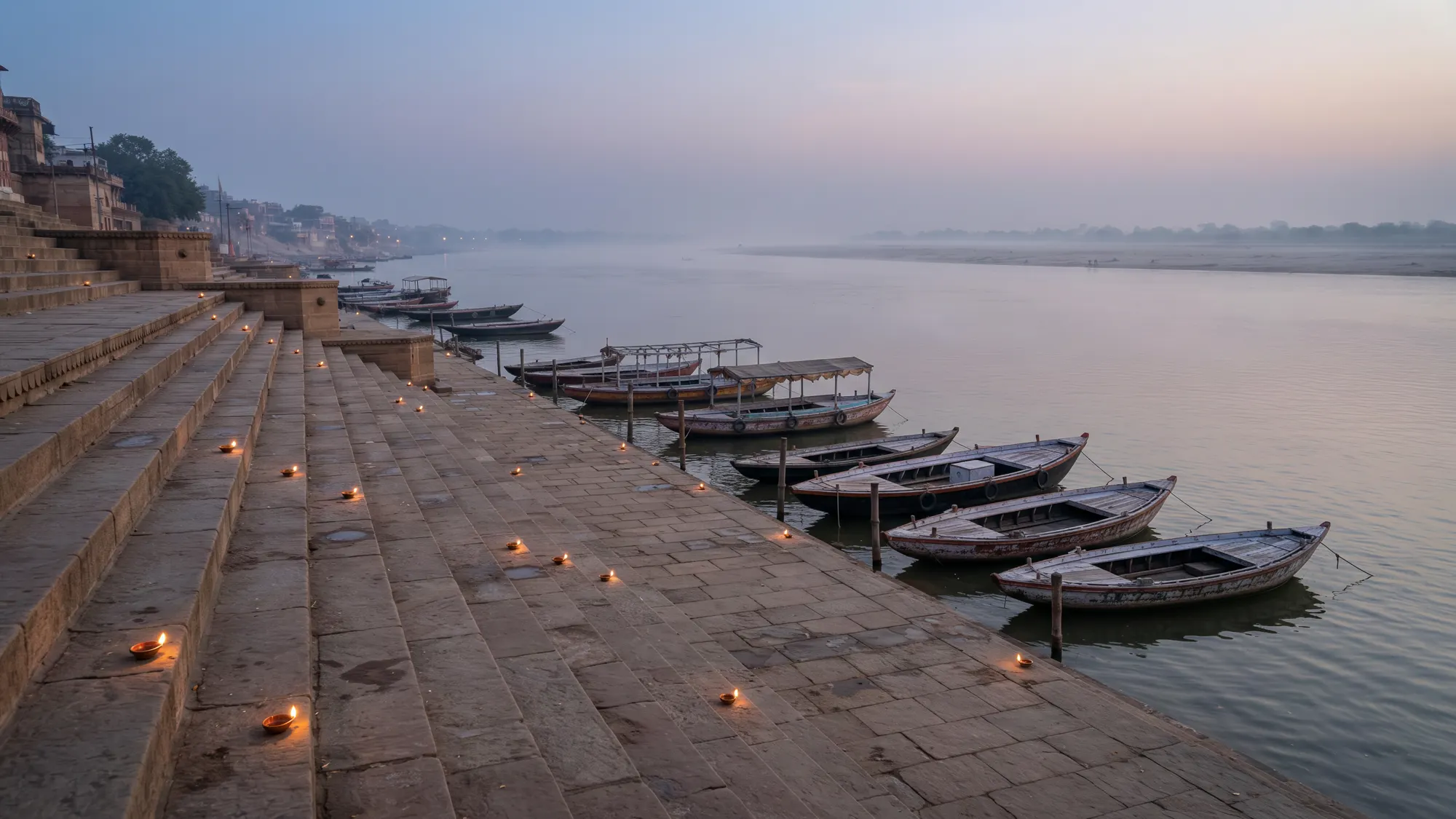
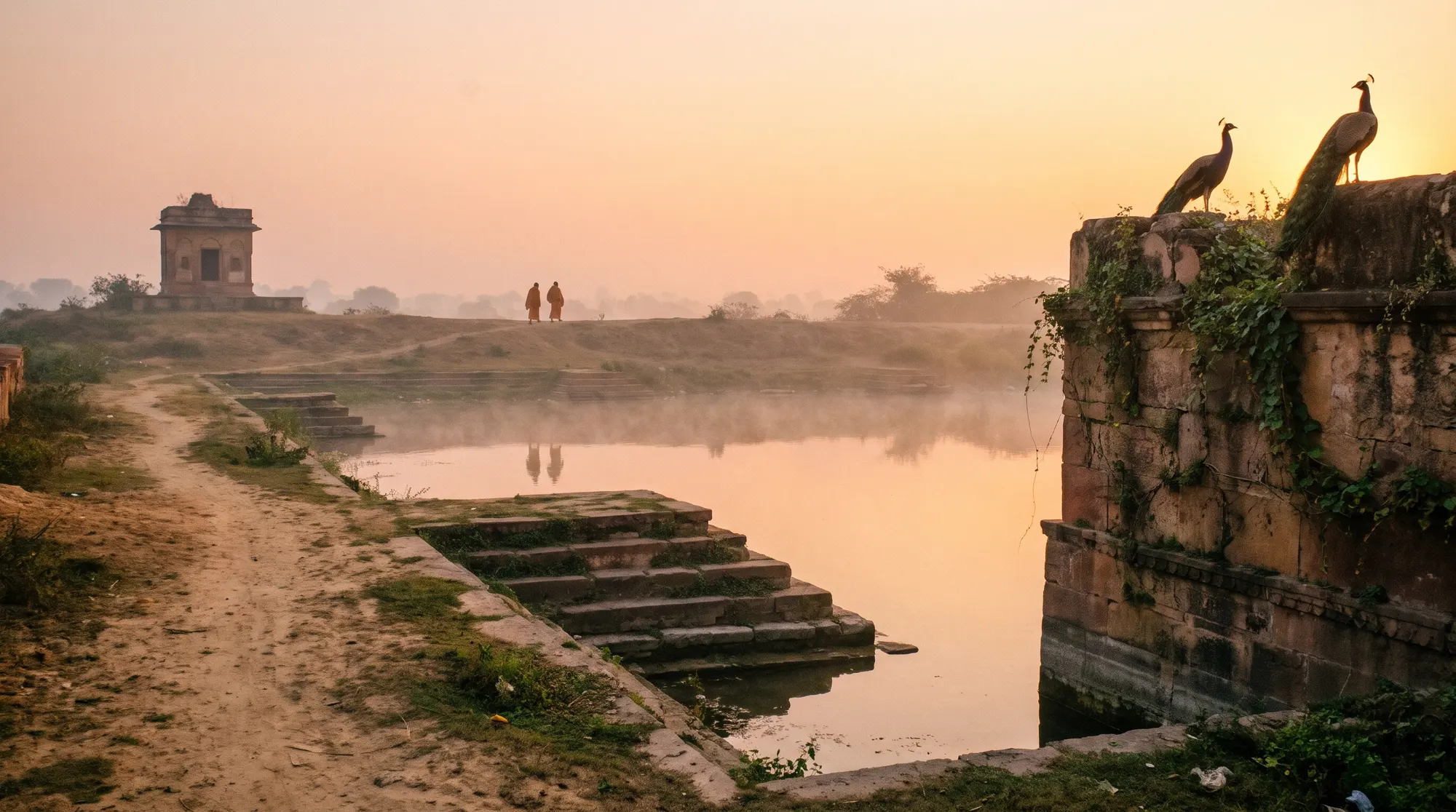
Vrindavan is the land of Krishna’s childhood. Devotees come to chant in its temples, lanes and groves. Many walk the Govardhan parikrama, about 21 km around the sacred hill, barefoot and chanting japa as they go. At ISKCON’s Krishna-Balaram Mandir, the Hare Krishna kirtan carries on day and night.
- The Govardhan circuit is usually given as about 21 km.
- Some devotees do it by full prostrations, which takes days.
Usually best: October to March. Kartik month and Govardhan Puja (the day after Diwali) bring the biggest crowds.
Sources: Incredible India: Govardhan Parikrama · Wikipedia: Krishna Balaram Mandir
West Bengal, India · Chaitanya Mahaprabhu, Radha-Krishna (Gaudiya Vaishnava, ISKCON)
Mayapur
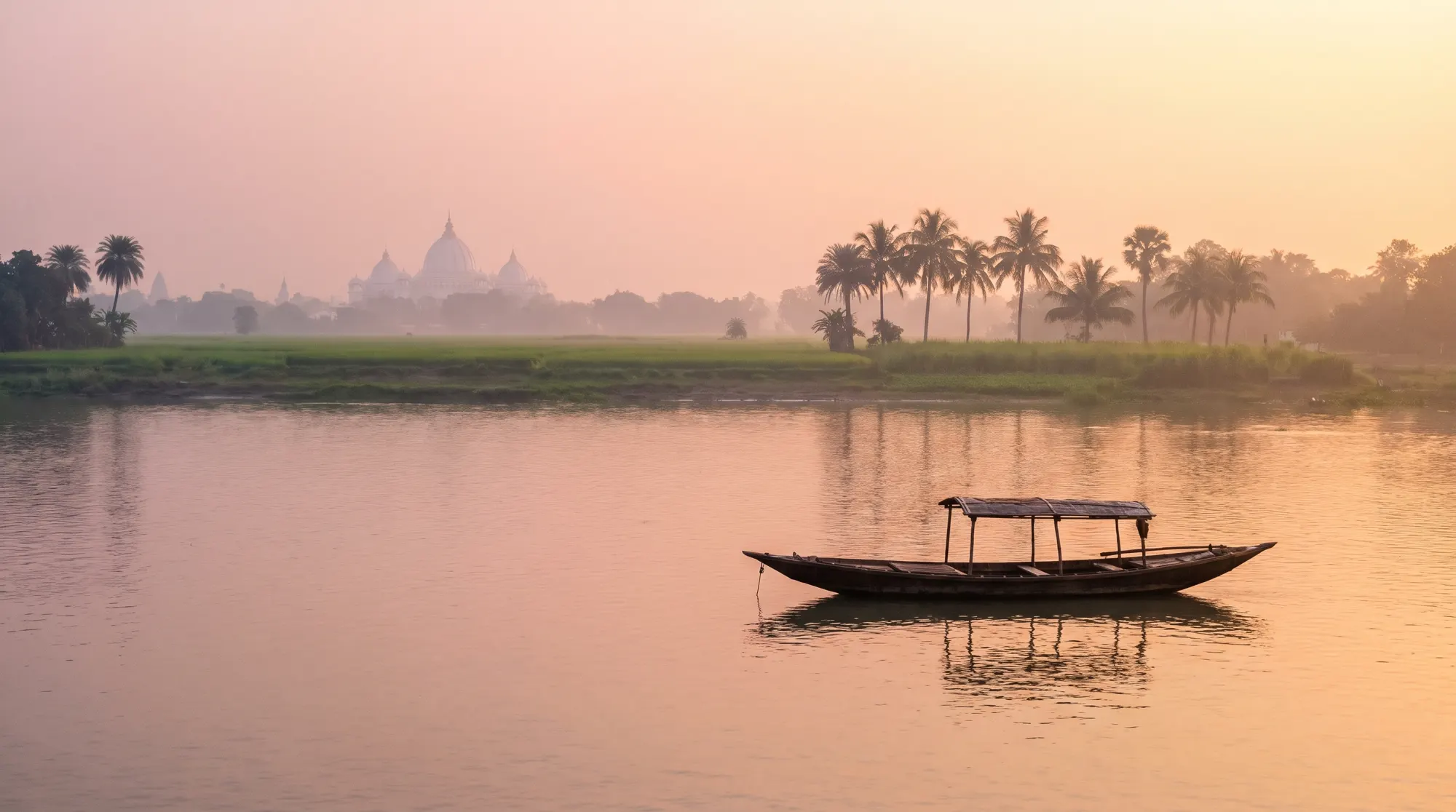
Mayapur, on the Ganga near Navadvip, is honoured as the birthplace of Chaitanya Mahaprabhu, who spread the chanting of the Holy Name. It is ISKCON’s world headquarters. Devotees from many countries chant their rounds on the riverbank at dawn and join kirtans that fill the temple halls.
- Gaura Purnima, the full moon of Phalguna, marks Chaitanya’s appearance (1486).
- ISKCON held its first Mayapur Gaura Purnima festival in 1972.
Usually best: February to March, around Gaura Purnima. Winter is mild.
Sources: Wikipedia: Gaura Purnima · Wikipedia: Mayapur
Uttar Pradesh, India · Shiva (Kashi Vishwanath) and Mother Ganga
Varanasi (Kashi)
Kashi is one of Hinduism’s holiest cities. Before sunrise, people sit on the stone ghats with their beads and chant while boats drift past. Each evening, the Ganga aarti at Dashashwamedh Ghat fills the river with lamps, bells and chanting.
- Dashashwamedh means “ten horse sacrifices”.
- Tradition says Brahma performed them here.
Usually best: October to March. The ghats are most peaceful at dawn.
Sources: Incredible India: Dashashwamedh Ghat · Wikipedia: Dashashwamedh Ghat
Uttar Pradesh, India · Rama (Vaishnava)
Ayodhya
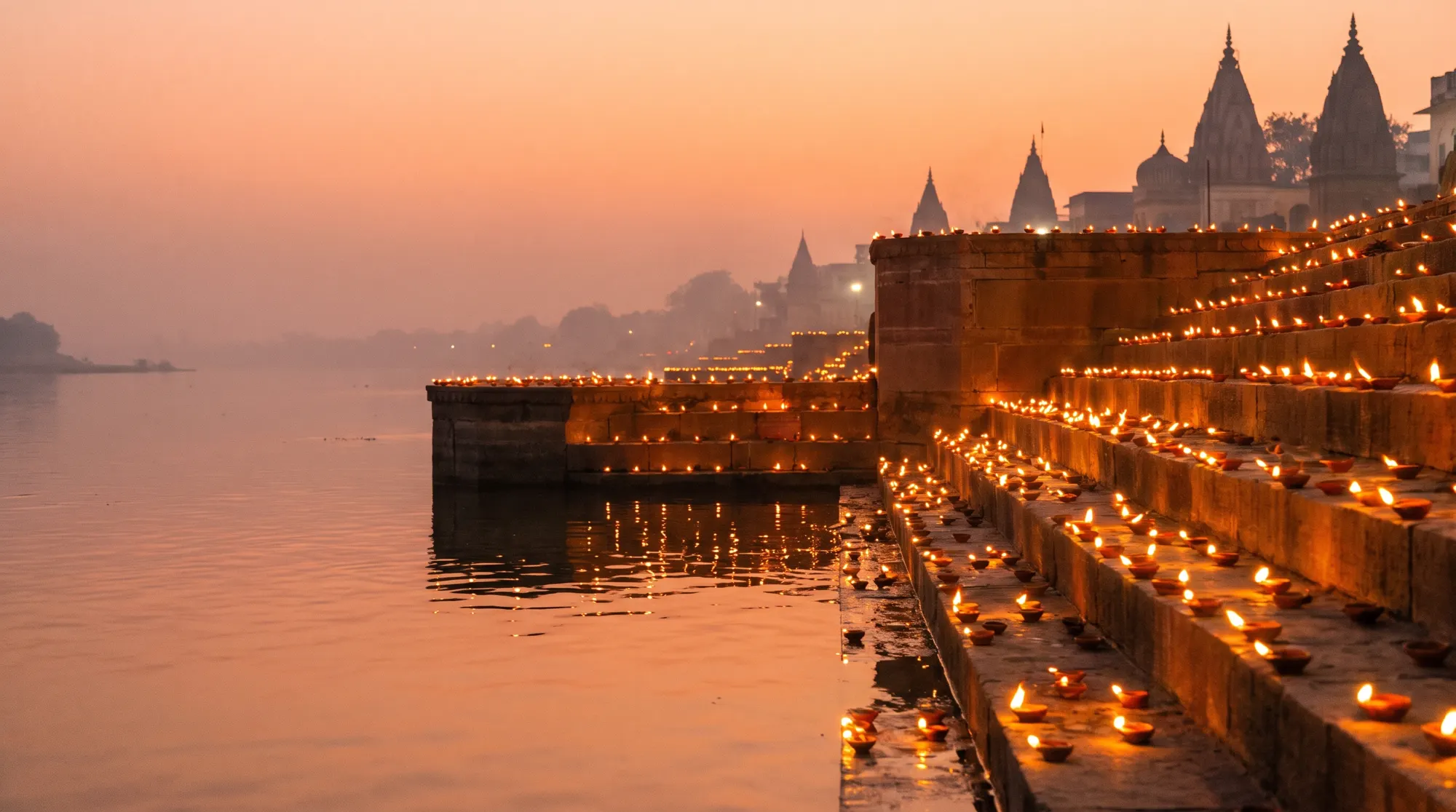
Ayodhya is honoured as Lord Rama’s birthplace. Devotees come to chant “Sita Ram” and “Shri Ram Jay Ram” by the Saryu river, at Hanuman Garhi, and at the new Ram Janmabhoomi Mandir. The evening aarti on the Saryu ghats is a gentle place to finish a mala.
- Ram Lalla was consecrated in the new temple on 22 January 2024.
- The rites began at the Saryu river on 16 January.
Usually best: October to March. Ram Navami (March or April) and Diwali bring very large crowds.
Sources: PM India: Pran Pratishtha · Wikipedia: Consecration of the Ram Mandir
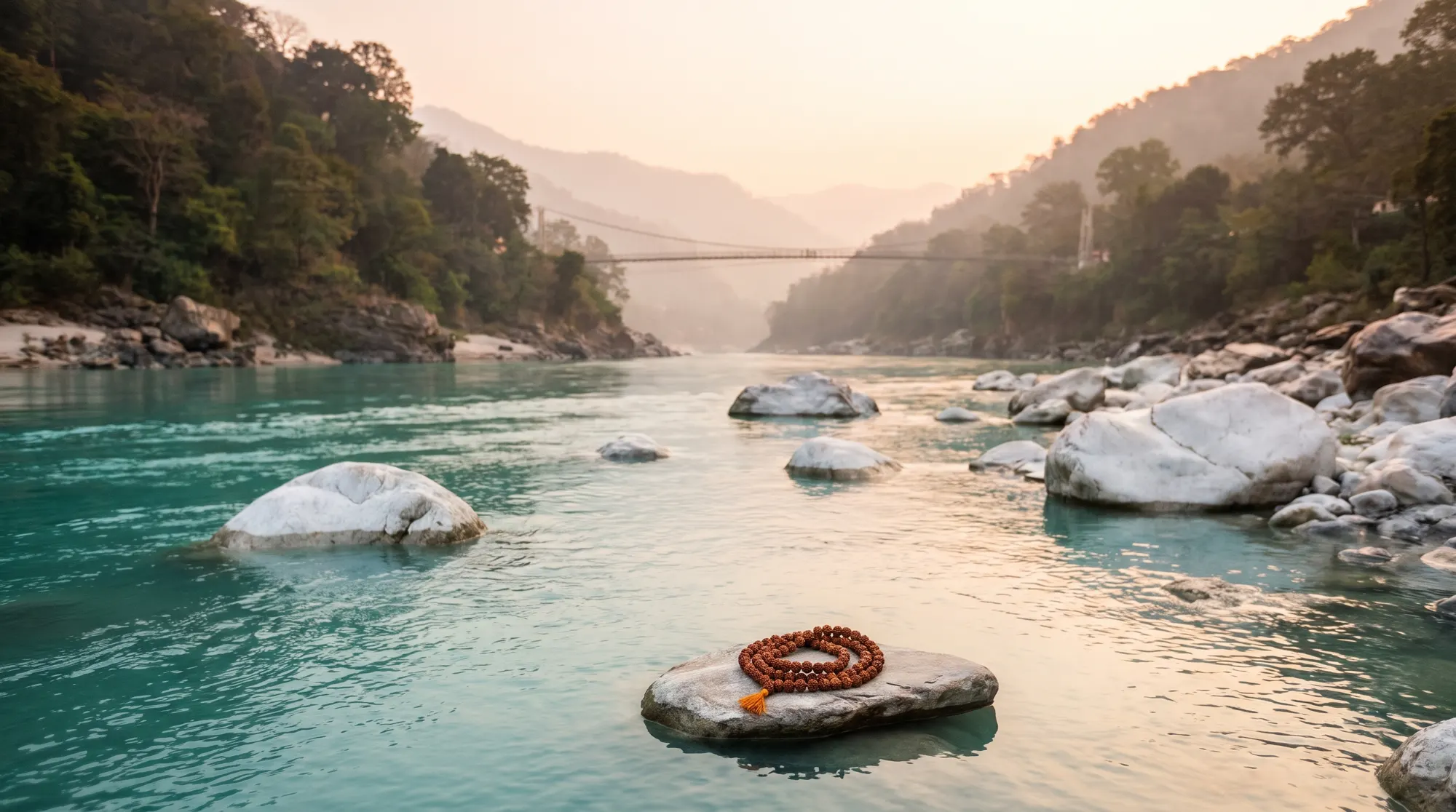
Uttarakhand, India · Mother Ganga, Shiva and many traditions
Rishikesh and Haridwar
Where the Ganga leaves the Himalaya, ashrams line the banks. People come for quiet japa by the cold, clear river. Every evening, aarti is sung at Parmarth Niketan and Triveni Ghat in Rishikesh, and at Har Ki Pauri in Haridwar, where lamps float away on the current.
- In Rishikesh, two different groups lead the aarti: Parmarth Niketan ashram, and the Ganga Sabha at Triveni Ghat.
- Haridwar is one of the four cities that host the Kumbh Mela.
Usually best: September to November and February to April. Monsoon (July to August) brings a high, fast river.
Sources: Incredible India: Triveni Ghat · Parmarth Niketan: Ganga Aarti
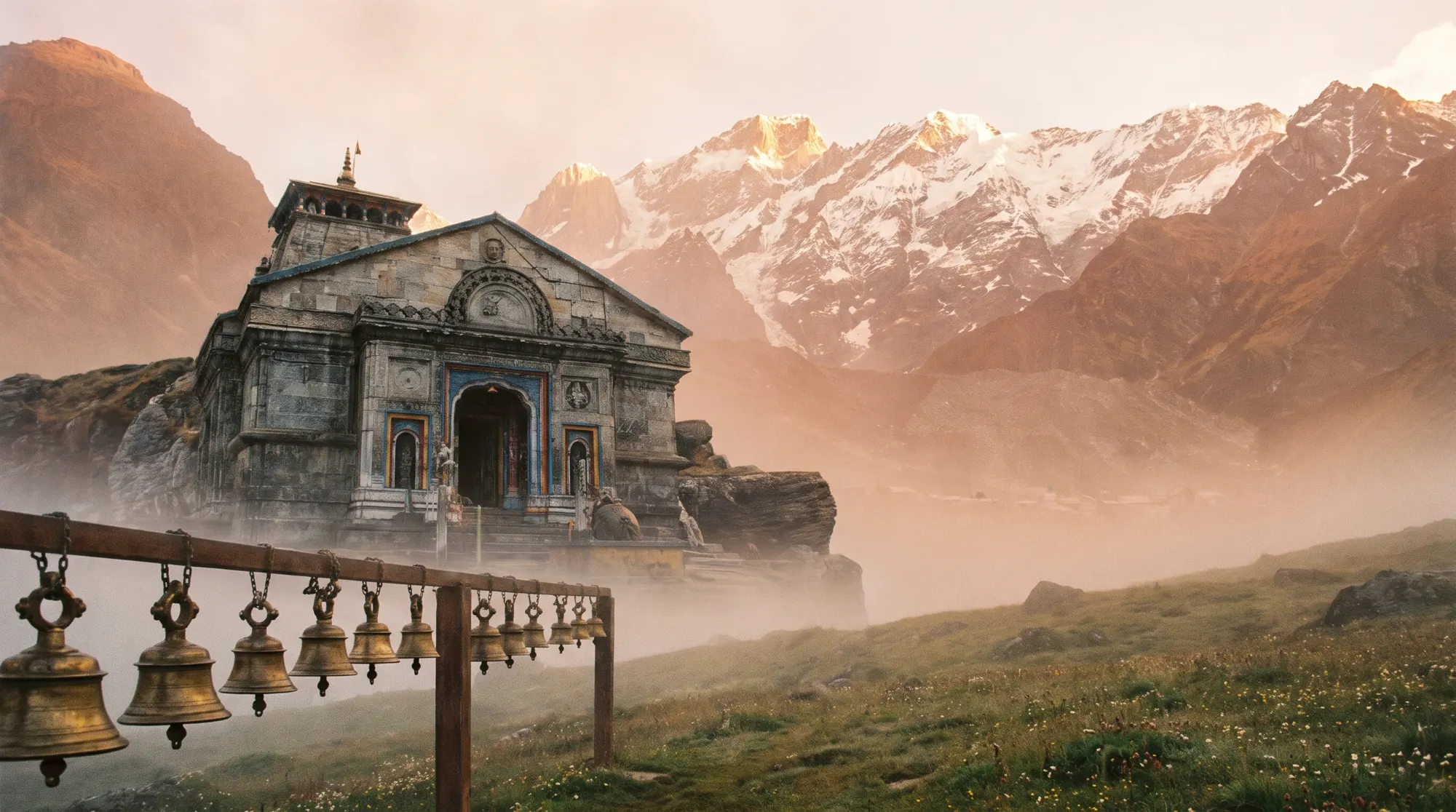
Uttarakhand, India · Shiva (one of the 12 Jyotirlingas)
Kedarnath
High in the Garhwal Himalaya, Kedarnath is one of the holiest Shiva shrines. Pilgrims climb the steep trail chanting “Om Namah Shivaya” or “Har Har Mahadev”, one breath and one bead at a time. Snow peaks stand right behind the stone temple.
- The temple stands at about 3,580 metres.
- It is open only from late April or May until Bhai Dooj in October or November, because snow closes it in winter.
Usually best: May to June and September to October. Avoid the monsoon (July to August).
Sources: Garhwal district: Kedarnath · Shri Kedarnath trust: About
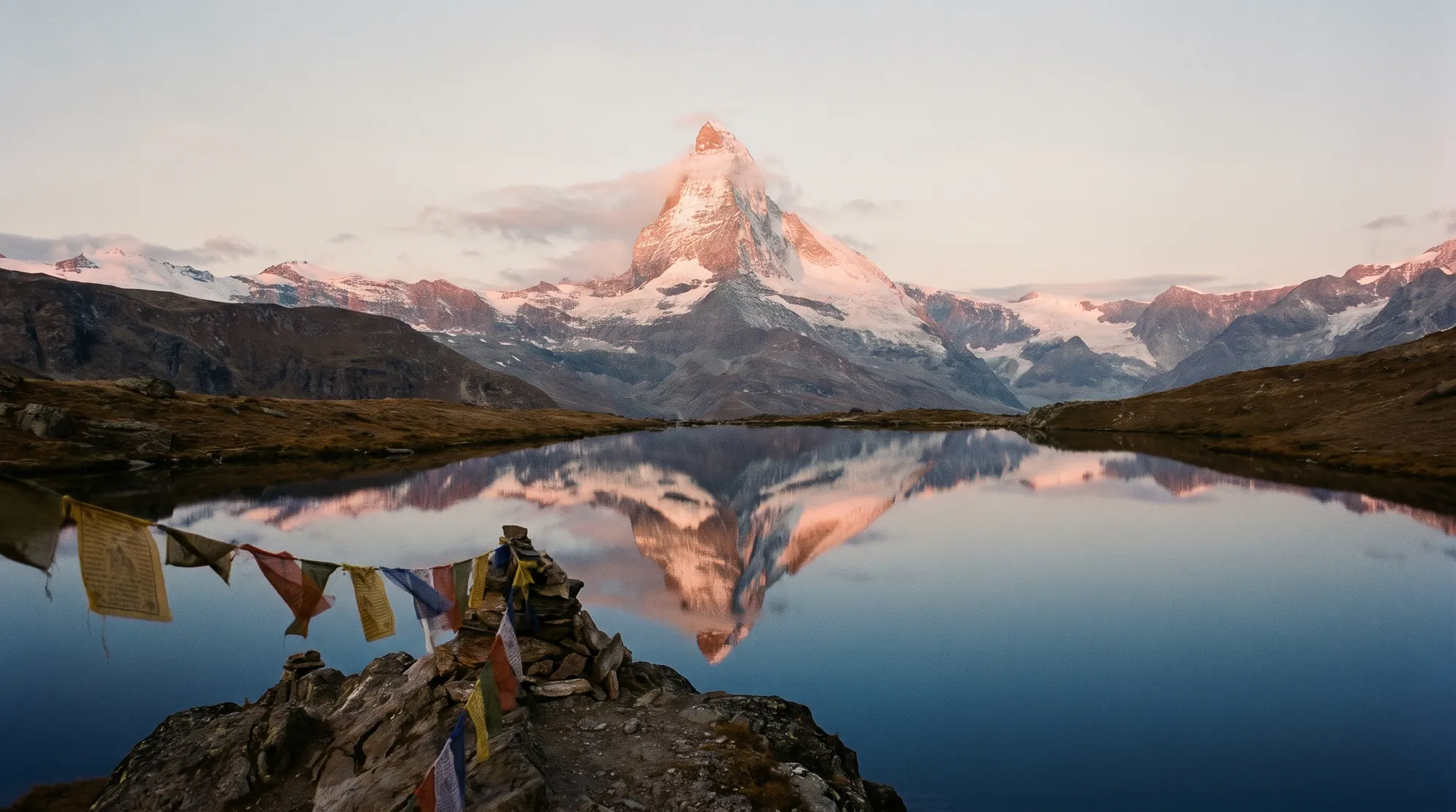
Tibet Autonomous Region (China) · Shiva for Hindus. Also sacred to Buddhists, Jains and Bon.
Mount Kailash and Lake Manasarovar
Hindus honour Kailash as the home of Shiva and Parvati. Pilgrims walk the kora, about 52 km around the mountain over three days, chanting the whole way. Many bathe in or walk around Lake Manasarovar nearby.
- Four faiths hold the mountain sacred.
- Hindus and Buddhists walk clockwise.
Usually best: About May or June to September. Travel needs permits and is very demanding at high altitude.
Sources: Wikipedia: Mount Kailash · Univ. of Colorado: Circumambulation of Mount Kailash
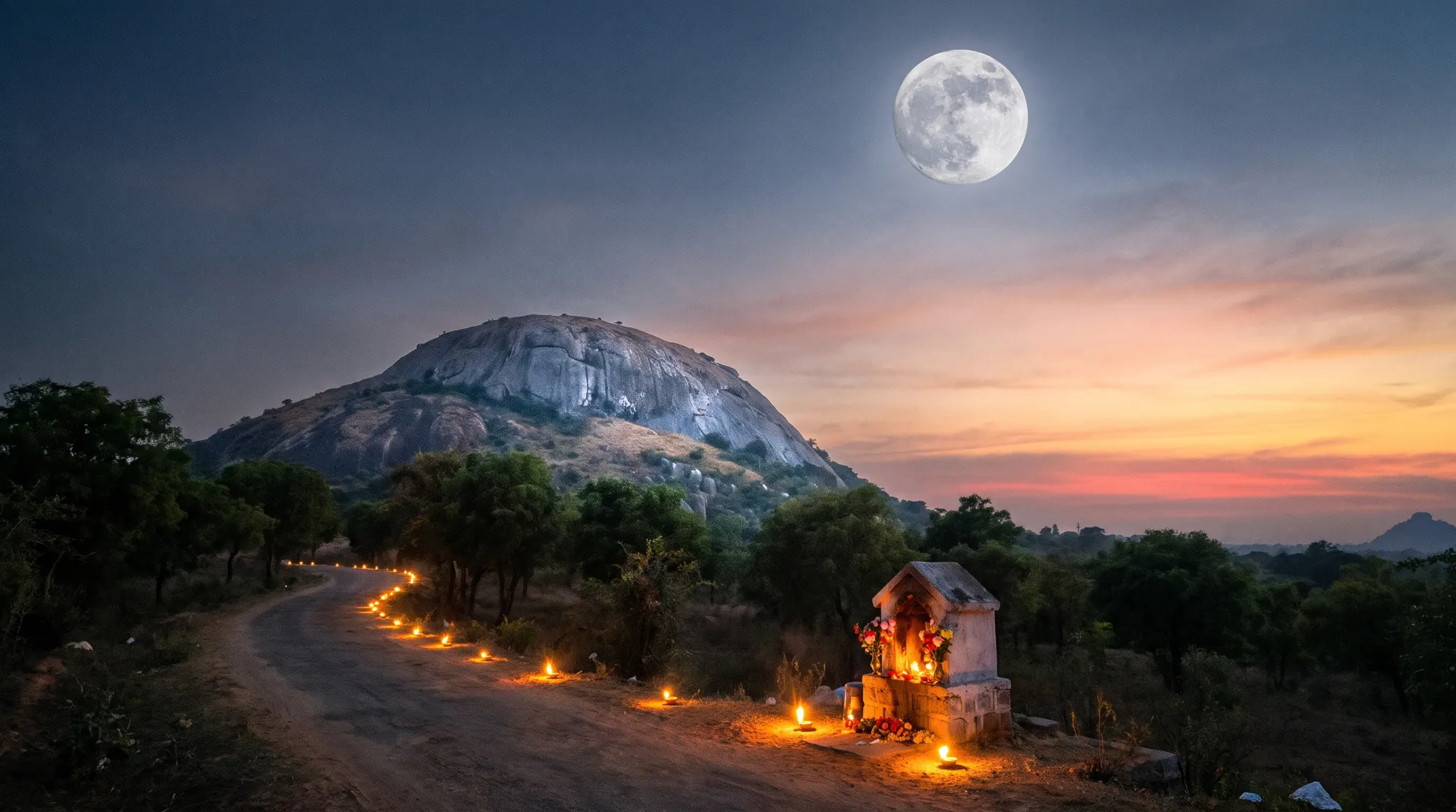
Tamil Nadu, India · Shiva as Arunachaleswarar (Shaiva)
Tiruvannamalai (Arunachala)
The hill of Arunachala is itself worshipped as Shiva. On full-moon nights, very large crowds walk the girivalam, a 14 km path around the hill, many barefoot and chanting quietly. The sage Ramana Maharshi lived on and below this hill for more than fifty years.
- Eight small lingam shrines sit around the girivalam path.
- Ramana Maharshi arrived on 1 September 1896, aged 16, and stayed until his passing in April 1950.
Usually best: Full-moon nights all year. Karthigai Deepam (November or December), when a great flame is lit on the summit, is the biggest festival.
Sources: Tiruvannamalai district: Girivalam · Sri Ramana timeline
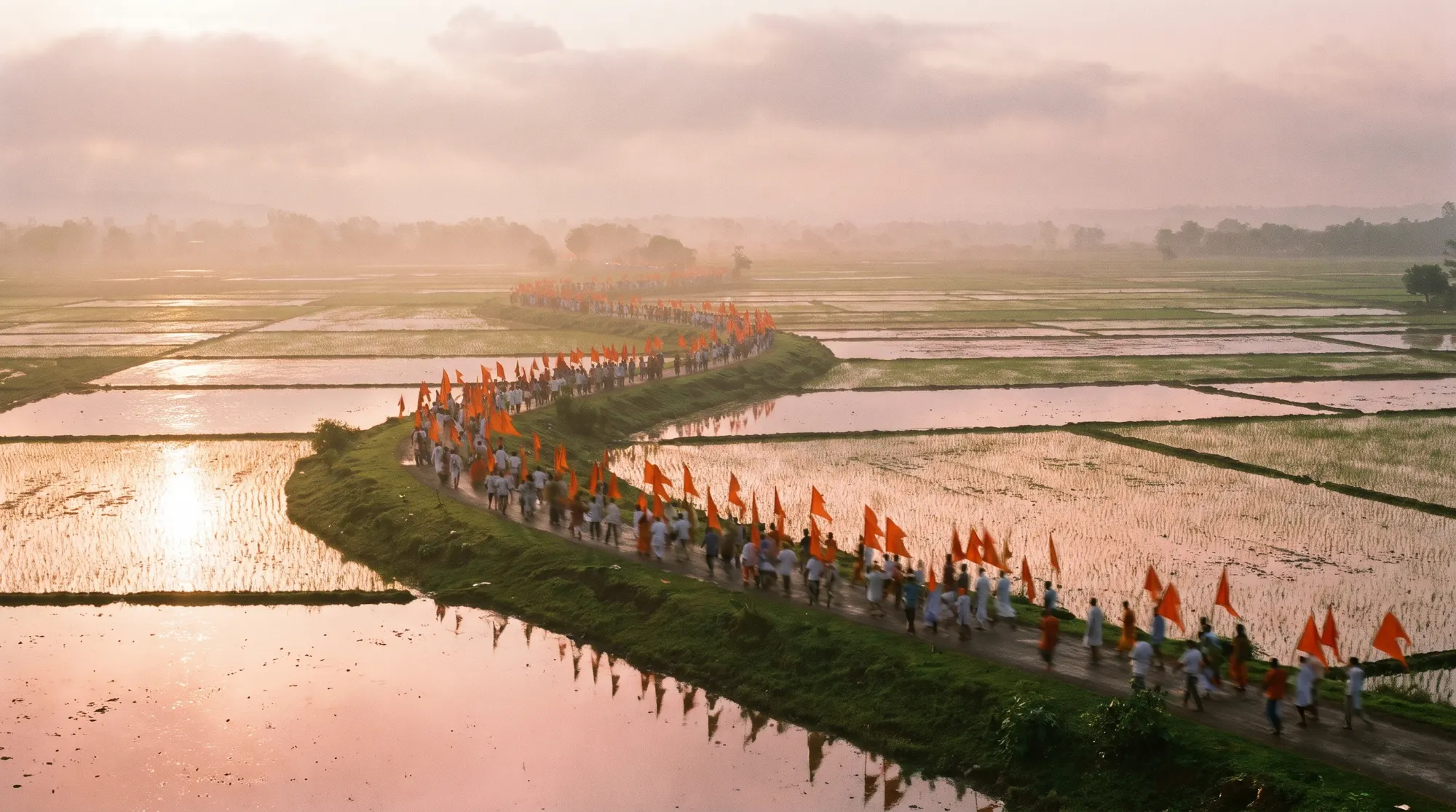
Maharashtra, India · Vitthal (Vithoba), a form of Krishna (Warkari tradition)
Pandharpur
Every year, Warkari pilgrims walk for about three weeks to Pandharpur, carrying the sandals (padukas) of the saints Dnyaneshwar and Tukaram in palanquins. They sing abhangs and chant “Jay Jay Ram Krishna Hari” all the way. Many wear a tulsi mala as a sign of the tradition.
- The wari ends on Ashadhi Ekadashi, when lakhs of pilgrims bathe in the Chandrabhaga river.
- The custom is centuries old.
Usually best: Ashadhi Ekadashi (June or July). Kartiki Ekadashi (October or November) is the second great gathering.
Sources: Incredible India: Pandharichi Vaari · Sahapedia: Pandharpur Wari
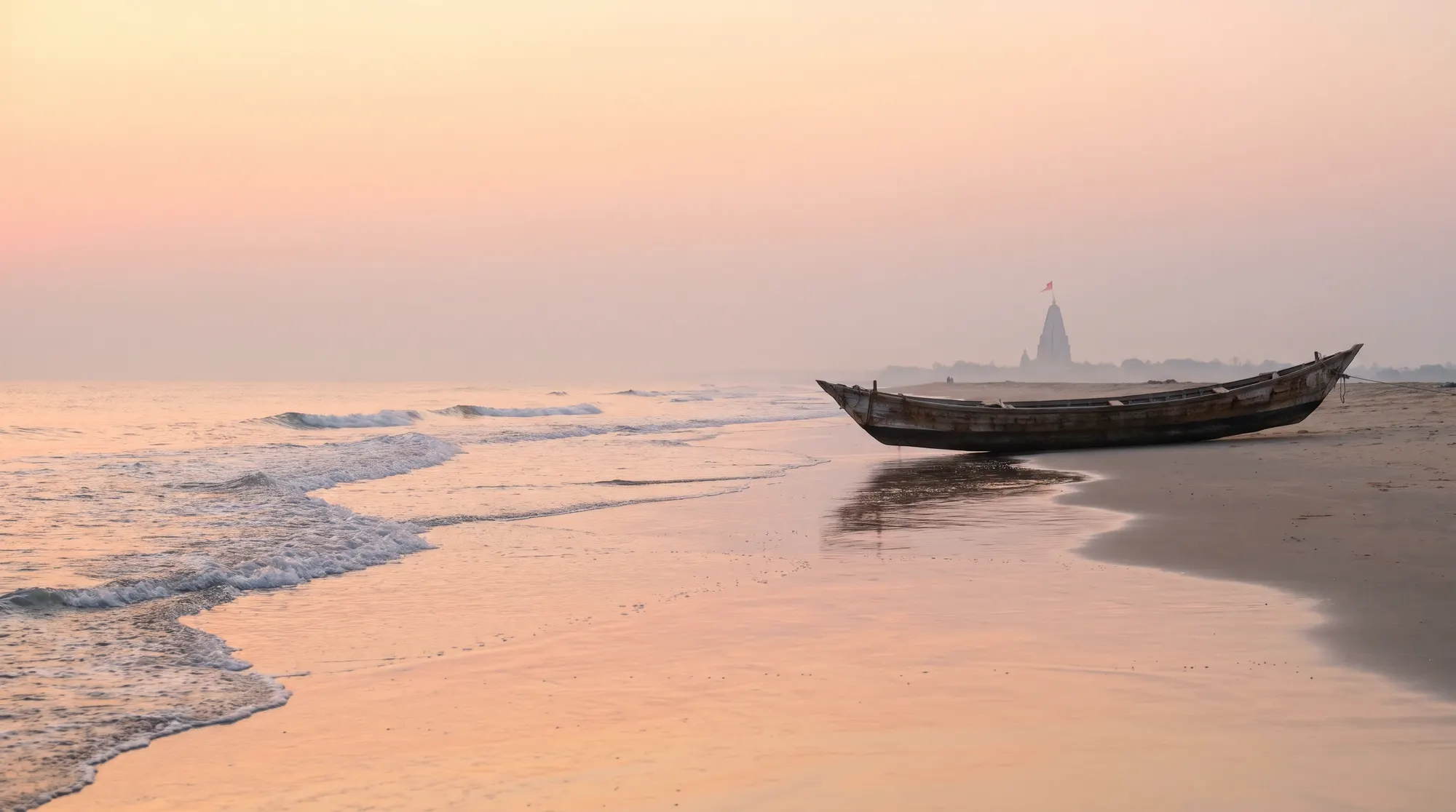
Odisha, India · Jagannath (Vaishnava)
Puri (Jagannath)
Puri is one of the four great dhams. Chaitanya Mahaprabhu spent his later years here, chanting and dancing before Jagannath. The resting place of Haridas Thakur, who is remembered for chanting the Holy Name all day, is by the sea here, and devotees still chant japa on the beach at dawn.
- A new flag is tied on top of the temple every day, by servitors who climb the tall spire by hand.
- Rath Yatra, when the deities ride out on giant chariots, is one of the largest festivals in the world.
Usually best: October to February for the weather. Rath Yatra is in June or July.
Sources: Incredible India: Sri Jagannath Temple · Wikipedia: Jagannath Temple, Puri
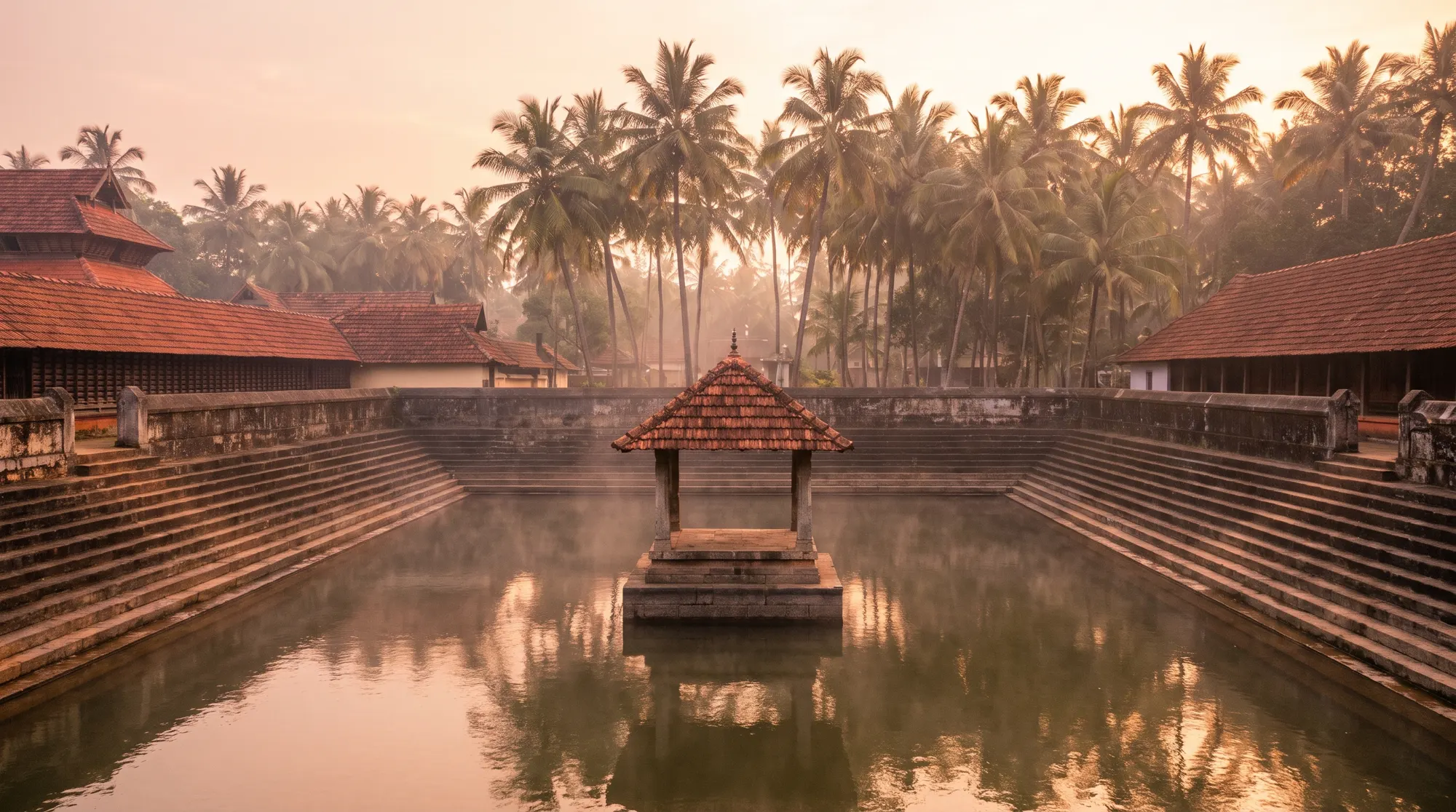
Karnataka, India · Krishna (Madhva tradition)
Udupi
Udupi’s Krishna temple was founded by the philosopher Madhvacharya in the 13th century. Devotees chant and sing Dasa songs in the temple and around the holy tank. Many first look at Krishna through a small window in the wall.
- The window is called Kanakana Kindi, after the poet-saint Kanakadasa.
- Tradition says he was refused entry and Krishna turned to face him.
Usually best: October to February. Krishna Janmashtami is a major festival.
Sources: Wikipedia: Udupi Sri Krishna Matha · Karnataka Tourism: Udupi Sri Krishna Temple
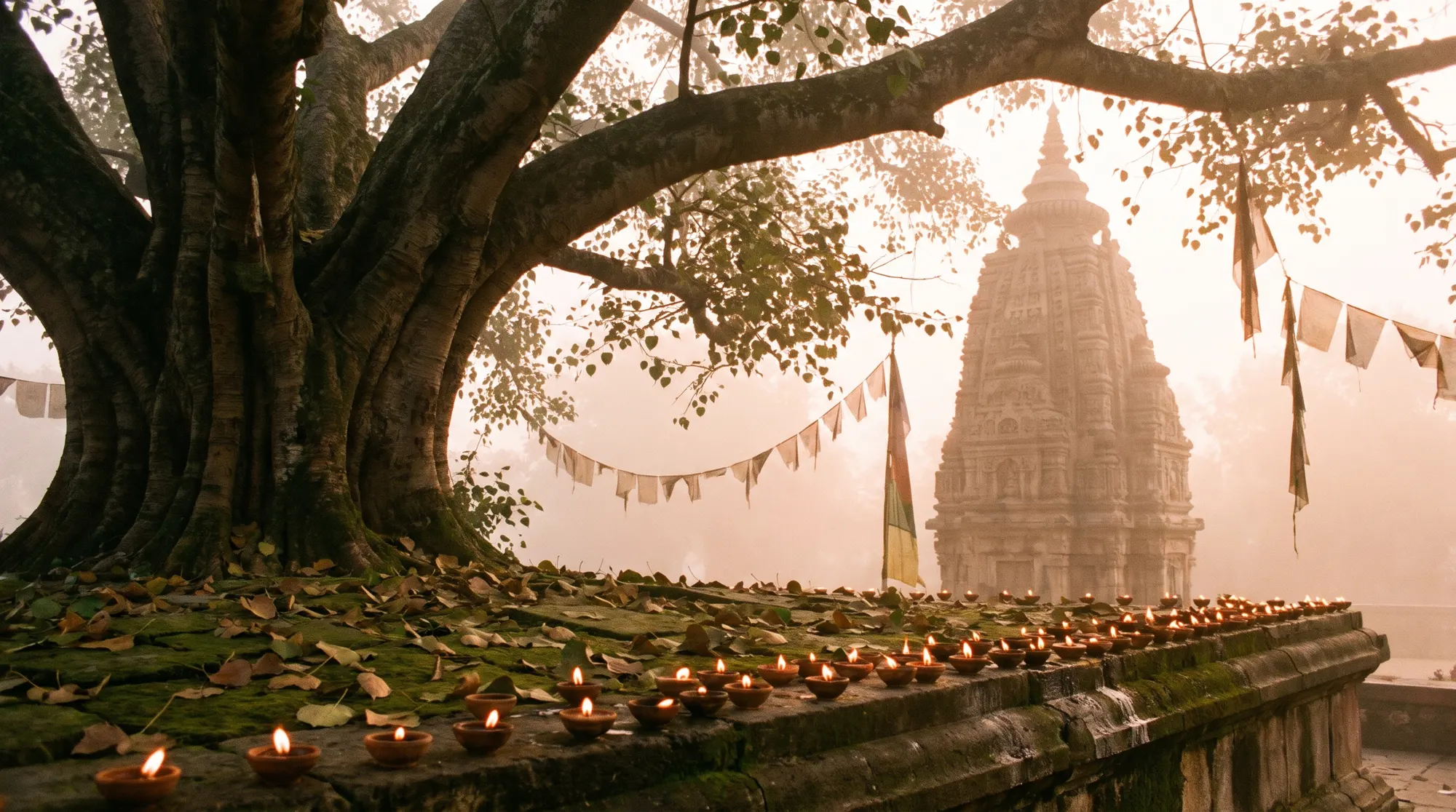
Bihar, India · The Buddha (Buddhist)
Bodh Gaya
Bodh Gaya is where the Buddha attained enlightenment under the Bodhi tree. Pilgrims from across Asia walk slowly around the Mahabodhi Temple turning their beads and chanting mantras such as “Om Mani Padme Hum”. In winter, great prayer gatherings fill the gardens with chanting.
- The Mahabodhi Temple Complex became a UNESCO World Heritage Site in 2002.
- The tree there today is believed to descend from the original Bodhi tree.
Usually best: October to March. December to February is the season of the large Monlam prayer festivals.
Sources: UNESCO: Mahabodhi Temple Complex · Archaeological Survey of India: Mahabodhi
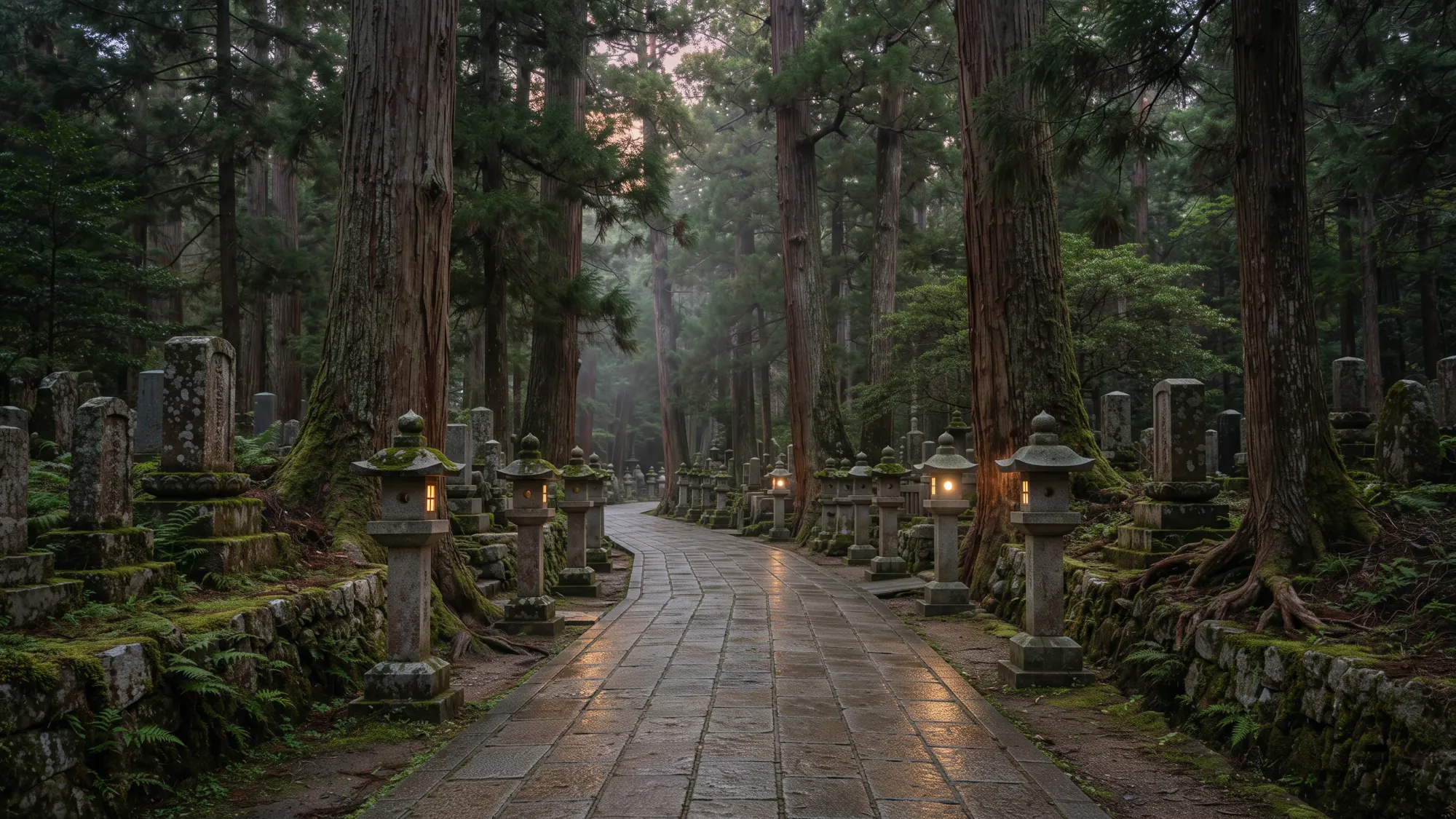
Wakayama, Japan · Kōbō Daishi (Kūkai), Shingon Buddhism
Kōyasan (Mount Kōya)
Kōyasan is a mountain-top temple town founded by the monk Kūkai in the 9th century. Pilgrims stay in temple lodgings, join the monks’ morning chanting, and walk the cedar-lined path of Okunoin by lantern light, holding their juzu beads.
- Shingon tradition holds that Kūkai did not die in 835 but entered eternal meditation.
- Monks still bring him meals every day.
Usually best: Spring and autumn. Autumn leaves peak around early November.
Sources: Japan National Tourism Organization: Koyasan · japan-guide.com: Koyasan
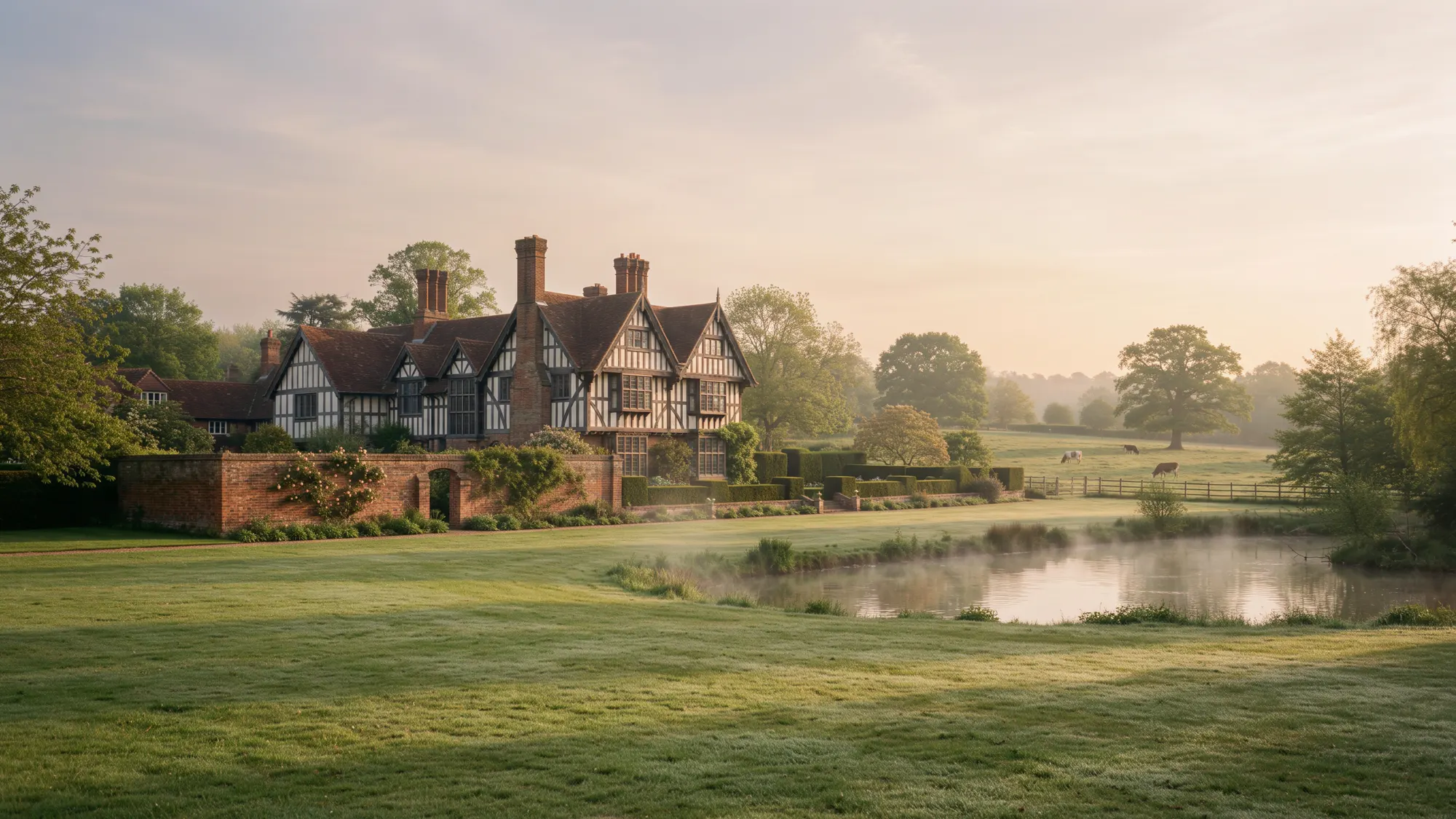
Hertfordshire, England · Radha-Krishna (ISKCON)
Bhaktivedanta Manor
Bhaktivedanta Manor, near Watford, is a Hare Krishna temple in an English country house. Devotees chant their morning rounds in its gardens and walk among its fields and cows. Many British Hindu families visit through the year.
- George Harrison bought the house and gave it to ISKCON in February 1973.
- It was renamed after Srila Prabhupada.
Usually best: Spring and summer for the gardens. Janmashtami (August or September) is its biggest festival.
Sources: Bhaktivedanta Manor: History · Wikipedia: Bhaktivedanta Manor
The mala is one of the oldest prayer tools in the world. Here are a few things devotees have passed down about it.
“Japa” means a low, murmured prayer.
The Sanskrit root jap means “to say in a low voice, to whisper or murmur”, especially prayers. The word already appears in Vedic texts.
Sources: Monier-Williams dictionary (Cologne scan) · Wikipedia: Japa
“Mala” means garland.
A japa mala is a “garland for japa”: a string of beads for counting the Name.
Sources: Wikipedia: Japamala
A mala has 108 beads, plus one more.
The extra bead, called the meru, sumeru or guru bead, sits at the head of the mala and is not counted.
Sources: Wikipedia: Japamala · Himalayan Institute: How to use a mala
Why 108? There are many traditional answers.
Hindus often point to the 108 Upanishads in one classic list, and the many hymns of 108 names of a deity. Some Buddhist schools count 108 afflictions of the mind. These are traditions of meaning, not science.
Sources: Wikipedia: Japamala · Wikipedia: Muktika (list of 108 Upanishads)
You don’t cross the meru.
When you reach the guru bead, you turn the mala around and chant the next round the other way.
Sources: Wikipedia: Japamala · Yoga International: How to use a mala
In many traditions, the index finger stays off the beads.
Devotees often move the beads with the thumb and middle finger. The index finger is said to stand for ego, so it is kept aside. Customs vary: some lineages use other fingers, and Buddhists often use the left hand.
Sources: New World Encyclopedia: Japa Mala · Wikipedia: Japamala
The bead bag has a name.
Many devotees keep the mala in a cloth bag while chanting. One traditional shape is the gomukhi (“cow’s mouth”), and many bags have a small hole for the index finger. It keeps the beads clean and off the floor.
Sources: Hindu Blog: Gomukha bag · ISKCON Desire Tree: Practice and paraphernalia
Each tradition has its own beads.
Vaishnavas, devotees of Krishna and Rama, use tulsi wood. Shaivas, devotees of Shiva, use rudraksha seeds. Sandalwood and crystal are common too, and Buddhists often use bodhi seeds or precious stones.
Sources: Wikipedia: Japamala
Japa can be spoken, whispered or silent.
Tradition names three kinds: vachika (aloud), upamshu (whispered, heard only by you) and manasika (in the mind). The Manusmriti (2.85) ranks silent japa highest.
Sources: Manusmriti 2.85 with Medhatithi (Wisdom Library) · Wikipedia: Japa
Sixteen rounds a day.
At initiation, ISKCON devotees promise to chant at least 16 rounds of the Hare Krishna mantra every day. That is 1,728 mantras, and since each mantra has 16 names, 27,648 names. It takes about two hours.
Sources: Vaniquotes: Japa Beads · Wikipedia: Hare Krishna (mantra))
The Maha Mantra comes from an Upanishad.
The Kali-Santarana Upanishad gives the sixteen names “Hare Rama, Hare Krishna”. Manuscripts from the south tend to put “Hare Rama” first, and those from the north “Hare Krishna” first.
Sources: Wikipedia: Kali-Santarana Upanishad · Wikipedia: Hare Krishna (mantra))
Japa can be written.
Likhita japa means writing the Name over and over as a meditation. In Varanasi, the Ram Ramapati Bank keeps no money. Devotees deposit booklets filled with “Ram”, sometimes written 125,000 times.
Sources: Wikipedia: Ramnam Bank · Hinduism Today: A bank for the written name of Ram
Sikhs use a mala too.
Many Sikhs repeat “Waheguru” on a mala, usually of 108 beads, though the number is not fixed.
Sources: SikhiWiki: Mala
The rosary is a cousin of the mala.
“Rosary” comes from the Latin rosarium, “rose garden”. Catholics, Buddhists (whose Japanese beads are called juzu) and Muslims (whose beads are the misbaha) all pray on beads.
Sources: Britannica: Rosary · Wikipedia: Prayer beads
Photographs on this page were made for Japa with an image model. They show the spirit of each place, not an exact view.